
Romance scams, catphishing, and sexual extortion (“sextortion”) are on the rise, causing significant harm, both financially and emotionally. Many victims hesitate to speak up, often out of embarrassment at having been deceived. However, this is an issue that can affect anyone, and that we should be able to discuss openly.
This lesson provides the knowledge to help you spot romance scams, support affected colleagues, friends, or family members, and handle these situations safely should you become a target yourself.
Romance scams have a wide reach and come at a high cost
Romance scams are perpetrated by both individuals (such as the infamous “Tinder Swindler”) and organised criminal networks like the Nigerian “Yahoo Boys.”
Scammers find their victims on social media and through online dating platforms. Victims are typically lonely adults aged 40–65, though people of all ages can be affected.
“Romance fraud costs UK victims £102 million in a year as reports surge by nearly a third”
These figures reflect only reported cases; the actual number of incidents is believed to be much higher, as many victims unfortunately choose not to report the crime. Also bear in mind that these figures do not account for the personal costs that victims face (such as the need for psychological support, sick leave, and lost earnings) which can be substantial.
How to Spot a Romance Scammer
How can you tell if the person on the other side of the screen is a real person looking for a connection, or a scammer hunting for a new victim?
Here are some typical signs of a romance scam to watch out for:
- The scammer “love-bombs” you with praise, compliments, and declarations of love, often very early on.
- They want to move the conversation off the dating platform and quickly suggest continuing the dialogue via Messenger, WhatsApp, or e-mail.
- They never meet you in person. They often make excuses, claiming to be away on a work assignment or travelling, sick, or otherwise unavailable.
- They constantly need financial help due to crises like illness or accidents, or to pay for plane tickets to visit you (though they never actually arrive).
- They ask you to keep the relationship a secret and not tell friends or family about the contact.
Practical Tips for Safe Online Dating
You can never be 100% safe, but here is some advice to make online dating a bit more secure:
- Choose reputable dating platforms with good reviews. While not entirely free of fake profiles, they usually have good reporting functions and procedures for removing them.
- Be sceptical of profiles that seem too good to be true. Use reverse image searches (Google Images, PimEyes, etc.) to check if the photos appear elsewhere. Also, be aware that scammers are increasingly using artificial intelligence to generate images and videos.
- Never share sensitive information such as your home address, financial details, intimate photos, or passwords. Anything you share can potentially be misused.
- Talk to someone you trust. When you’re wearing rose-coloured glasses, it isn’t always easy to be objective. Ask a friend for advice when you’re unsure.
- Do not lend or give money to someone you haven’t met in person. If your ‘online sweetheart’ doesn’t respect this, it isn’t your heart they’re after.
Steps to take in the event of fraud
If you or someone you know falls victim to fraud, the following advice may be helpful:
Protect your assets: If you have transferred money to the scammer, taken out a loan, or shared credit card details, contact your bank for assistance.
Document everything: Save screenshots of communications, transactions, and fraud attempts, and report the matter to the police. The information you gather may serve as important evidence during an investigation and future legal proceedings.
Seek help: Talk to someone you trust and ask for support. Take the time you need to process the experience, and remember that it is normal to feel shame, anger, or grief in a situation like this. You are not alone.
If someone you know has been defrauded: Be present and show them that you care. Listen without judgement. Help them with practical tasks, such as contacting the police or an advisor if needed.
Catfishing
Catfishing involves creating a fake online identity and using it to lure others into an intimate relationship. Once contact has been established (usually via social media, dating sites, or chat services) the perpetrators pressure victims into sharing nude photos or videos. They may use this material for their own gratification, share it with like-minded individuals online, or use it for sextortion.
Fake dating websites are usually pure catfishing operations. If you receive an e-mail promising true love or that contains explicit themes and content, along with a link to a website you have never heard of, do not click the link!
These scammers are ruthless and also target children and young people. In recent years, there have been several cases where young boys subjected to sexual extortion have committed suicide. It is therefore important to make young people aware of these dangers.
Sextortion
These are scam attempts that come in various forms. Here, we will briefly look at sextortion involving a spoofed e-mail, which is quite common.
The generic sextortion attempt shown in the image below is sent from a spoofed email address that appears to be the recipient’s own. The scammer will claim to have control over the victim’s email account, PC camera, contact lists, and so on.
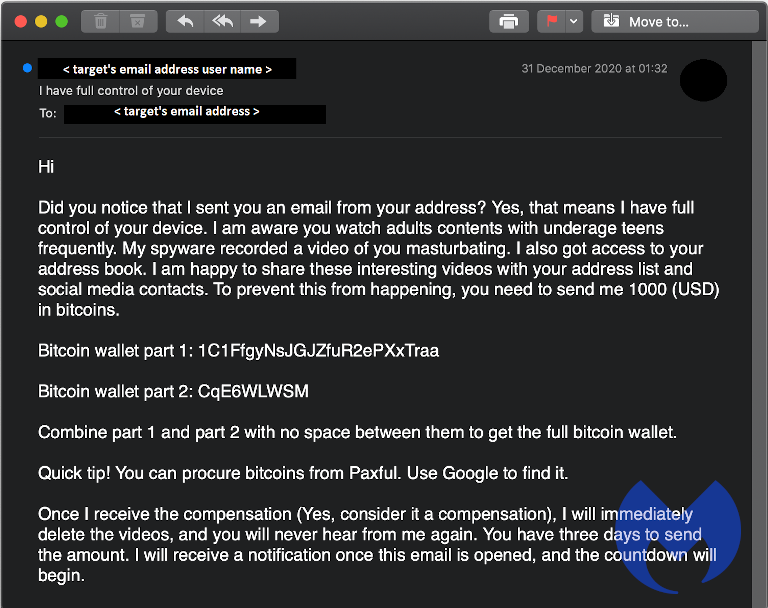
If they provide one of your passwords as “proof,” it has likely been obtained from previous data breaches, such as password leaked from LinkedIn or Facebook.
What the scammer wants you to believe, is that they possess intimate photos and video footage of you. Material that they threaten to expose publicly or share with everyone on your contact list, unless you send them money; usually in the form of cryptocurrency.
These spoofed e-mails are unpleasant, but nothing to be concerned about. However, you might want to use the reporting features in your e-mail account to let your provider (Gmail, Outlook) know that it is unwelcome.
For those who have in fact fallen prey to a catfishing operation, and that have shared intimate images with a stranger online, follow the simple guidelines below.
Advice for those targeted by sextortion
- Cut off contact with the blackmailers and do not pay. They will only ask for more money, and there is no guarantee they will delete the intimate photos or videos they have of you.
- Collect and keep all the evidence, then contact the police to report the incident.
- Remove the intimate content from the internet, if possible (StopNCII for adults, Take it down for kids)
- Talk to a friend or counsellor; you do not have to go through this alone.
Results
Well done!
Not quite there yet. You might want to read the lesson again.


